Everyone Must Have Been Sleeping In – Maybe there was some late night partying but they all eventually came around for a good turnout. With some of the breakfast crew members out the subs came through with no delays on the serving line. We ended up with about 68 in attendance for the meeting and 50 breakfasts sold.
Call to Order – President Dick Keyt called the meeting to order and asked to recognize guests in attendance. Ross Carnes, who coordinates Granbury foreign exchange students, came up front to seek a host family for a French exchange student starting at Granbury HS. She has a private pilot license and it would be great for her to live in the airpark. Ross was very appreciative of the over 65 Young Eagles rides that have been given to exchange students in the past. John Kirtland is retired from military service of multiple branches including the Army Corp of Engineers. He has an RV-10 project and would gladly accept advise from the experts. Dick asked the half dozen chapter RV-10 builders to meet up with him during the break. Brian Bowen recently joined the chapter and is a recently retired A&P from the helicopter industry. He owns a Cessna 150 currently.
Dick recognized the breakfast and setup crew for another tasty service.
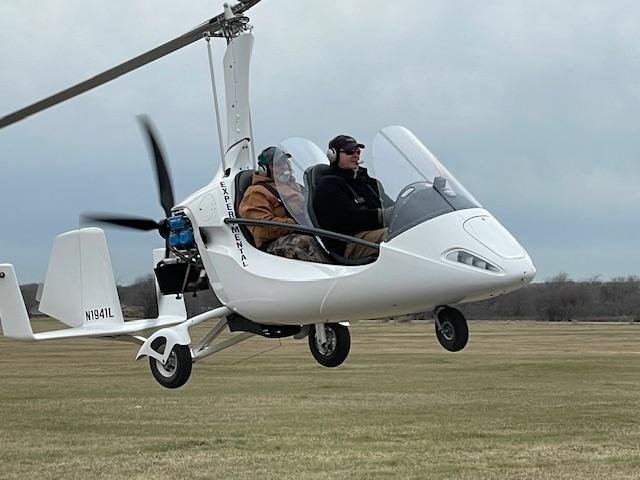
In a special recognition Dick brought out several embroidered jackets to present. First up was Ray Lewis who completed and flew 2 place AutoGyros (MTO and Cavalon). As a previous Bonanza owner this aircraft opened up a whole new community of flying friends in the gyro community. It was also personally satisfying to complete the build with his son Michael. Next up was Gene Chiappe who built and flew a Zenith CH-750 Cruzer powered by a Continental O-200. Finally, Jason Tremble stayed in the RV world by completing an RV-10 after previously building an RV-7. He said this one was special because his son was able to help in the construction. He was also able to help build his engine, an Aerosport IO-540. Congratulations to all these guys who persevered through an often challenging and frustrating build through to the finish line! One last jacket was awarded to Sue Cole who had an unfortunate encounter with a gas heater melting the back of her jacket at a previous chapter meeting. We are thankful that only the jacket encountered the burn!
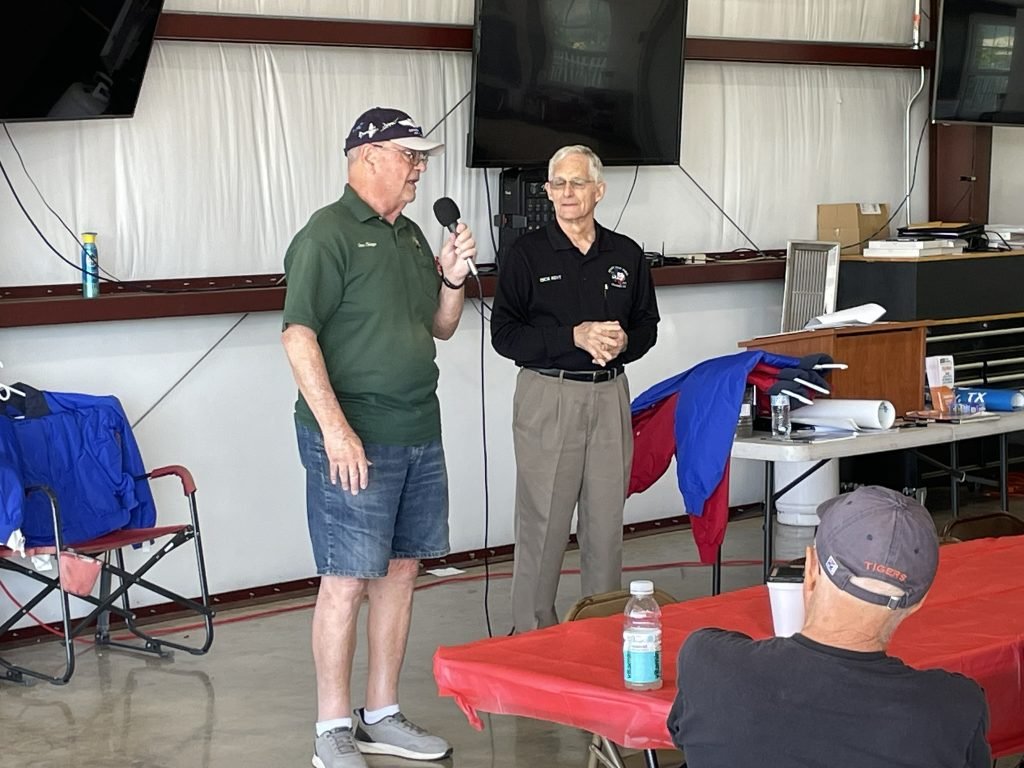
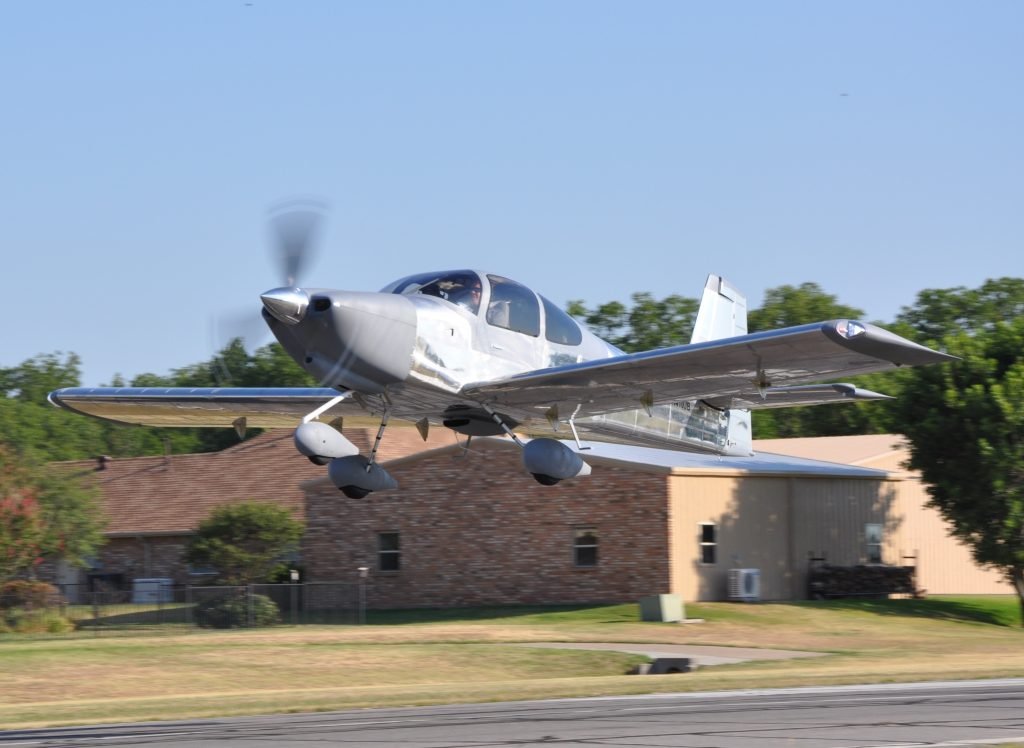
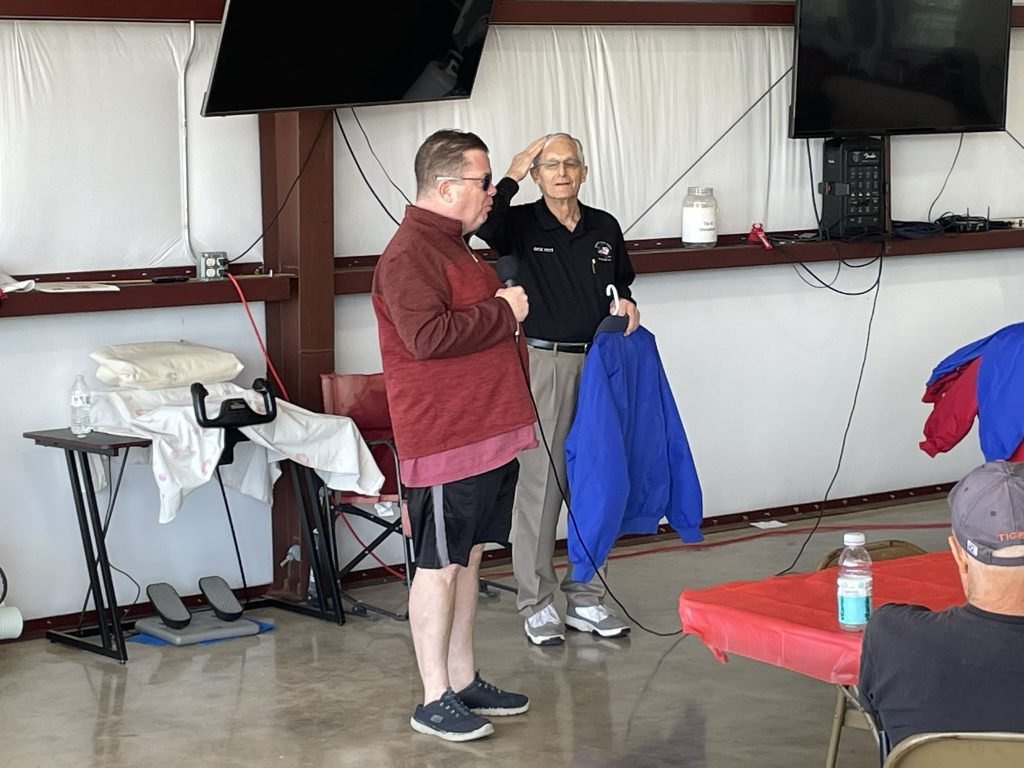
Dick mentioned that 983 logoed shirts can now be ordered. Since the McJunkins were not in attendance, he requested anyone interested place their orders with Bill Eslick and Greg Walker at the back table. Future orders should be place directly with Geneva McJunkin.
Bob Pastusek announced that the September Fly In planning is underway. Bob mentioned that he is seeking to identify backup leads for each team executing the Fly In activities. This will allow the lead to get some time off for lunch and see the rest of the event. PLEASE VOLUNTEER!
Dick requested a volunteer to lead the Flying Start program this year. Tom Woodward, who led two prior events, will layout what the new leader needs to do. This is a one day event similar to Young Eagles but for adults learning about what it takes to become a pilot. EAA National provides all the materials. PLEASE VOLUNTEER!
Youth Programs – John Bowen reported Mason Vickers has been approved for the Ray Aviation Scholarship and will begin training with Mike Hustak. Congrats Mason! John said the next Young Eagles event will be May 3rd and will be the last before the Fly In in September. He emphasized the need for pilots — Last event only had two pilots. He noted that all ground crew and pilots need to take Youth Protection Training every 3 years. Make sure you are current before volunteering at an event.
Project Reports – Sam Butler announced the recent purchase of a Rans S-21 kit from another builder. It is mostly assembled. He is in need of a cradle to store the wings and a Lycoming 320 in need of a rebuild. The lead time for IO-340s is over 18 months.
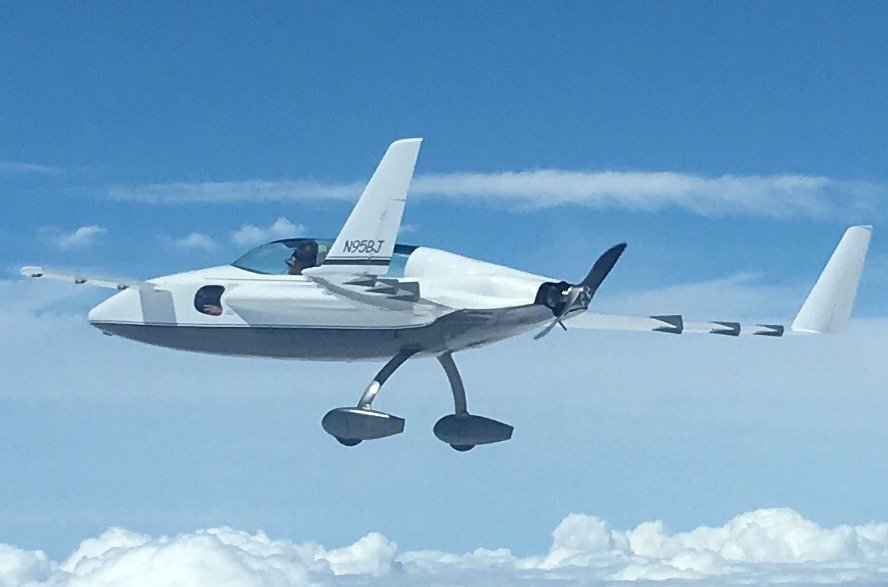
F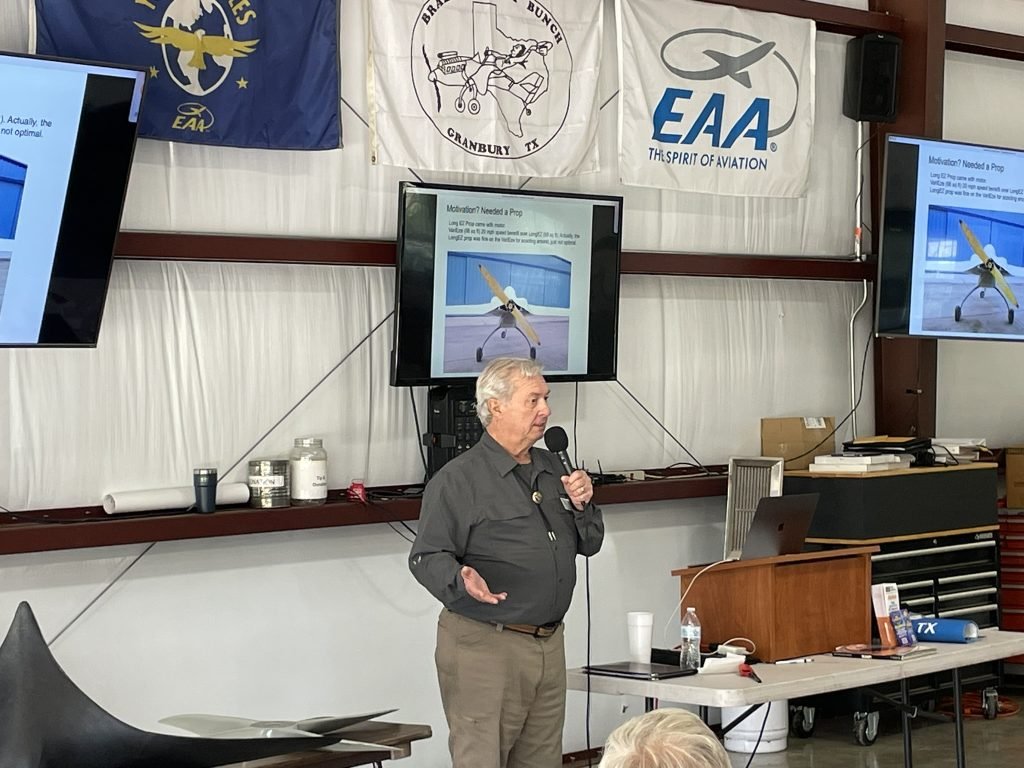 eatured Speaker – Following a short break, Bob Pastusek introduced Bill James. Bill is a retired US Marine Corps pilot, aerospace engineer for Lockheed Martin and F-35 instructor and test pilot. He lives at Bourland Airpark where he regularly flies the VariEze he built 30 years ago. Bill noted he has one of the lightest VariEZes and that he has hand propped it the entire time. For those less familiar with the VariEze he mentioned the wing area on the original VariEze is 66 square feet and 99 on the LongEZ. They are extremely efficient design powered early on by VW conversions and small Continentals. Later builders upped the horsepower with Lycoming o-235 and O-320. Highlighting the design efficiency was Gary Hertzler’s nonstop flight of 2500 miles on 42 gallons of fuel.
One of the bigger problems the Wright Brothers figured out in designing a successful airplane was the propeller design. Early attempts with a flat plate and no twist did not work. They introduced twist into the propeller and significantly improved the efficiency. The other important feature was making it as thin as possible. Bill emphasized another less known fact about wood and composite propellers. The primary purpose of a crush plate is to provide a strong, secure, and friction-based connection between the propeller hub and the engine crankshaft flange. Proper bolt torqueing is to maintain the friction and not carry the torque through the bolts. Throughout Bill’s performance testing he learned the less obvious impacts of density altitude. Bill explained how all pilots are trained to recognize density altitude as a critical performance parameter, however, the density altitude right at the runway surface where the aerodynamics and engine operate is an even bigger driver for takeoff performance. The airport could be reporting a density altitude of almost half the actual density altitude at the runway surface. He highlighted how the Wright Brothers on that special day in December had a density altitude of -2002 feet! Attempts to repeat their performance with a replica Wright Flyer were unsuccessful due to much higher density altitude.
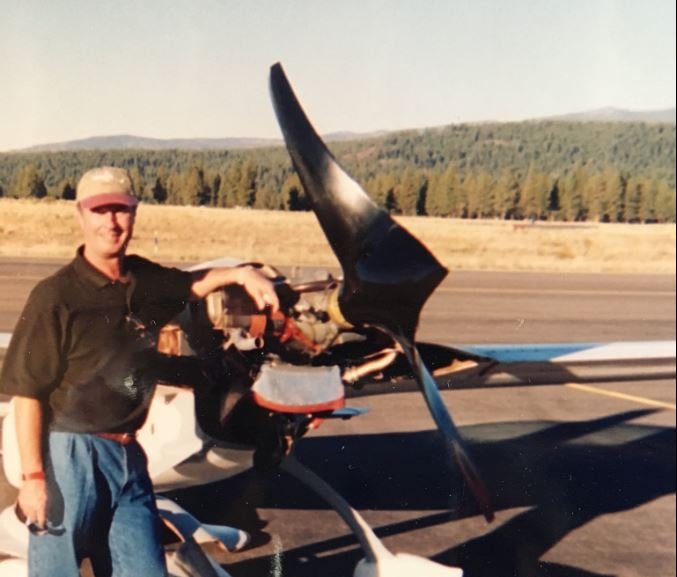 Bill followed up with a fascinating discussion about the Bat Prop. The design was based on input from several prolific propeller designers, including Gary Hertzler, who has produced 600 Silver Bullet Propellers common on a lot of VariEze and LongEZ. The idea was making the blade as thin as possible by achieving a “ten-percent blade-thickness to chord-length”. Fiberglass and carbon fiber are enablers for allowing a thinner blade. In his design he carried the 10% rule all the way across, including the hub. The chord continues to increase as you get to the hub and the blade becomes the spinner. After years of successful use, an engineer sent him the image of the Horten Brothers 1937 flying wing with pusher prop, saying, “You’re not the first.”
Bill is the author of more than 200 short stories about aircraft and homebuilding. You can learn more about Bill and his interests at www.EZChron.com.
VMC/IMC Club
Tom Woodward (VMC) and Dick Keyt (IMC) were facilitators for this month. There was a good turnout with about 15 pilots and lots of great discussion. Tom Woodward collects a roster of all attendees for FAA Wings Credit.
Thanks to all who stayed to store the tables and chairs and help put the airplane back in the hanger.
