
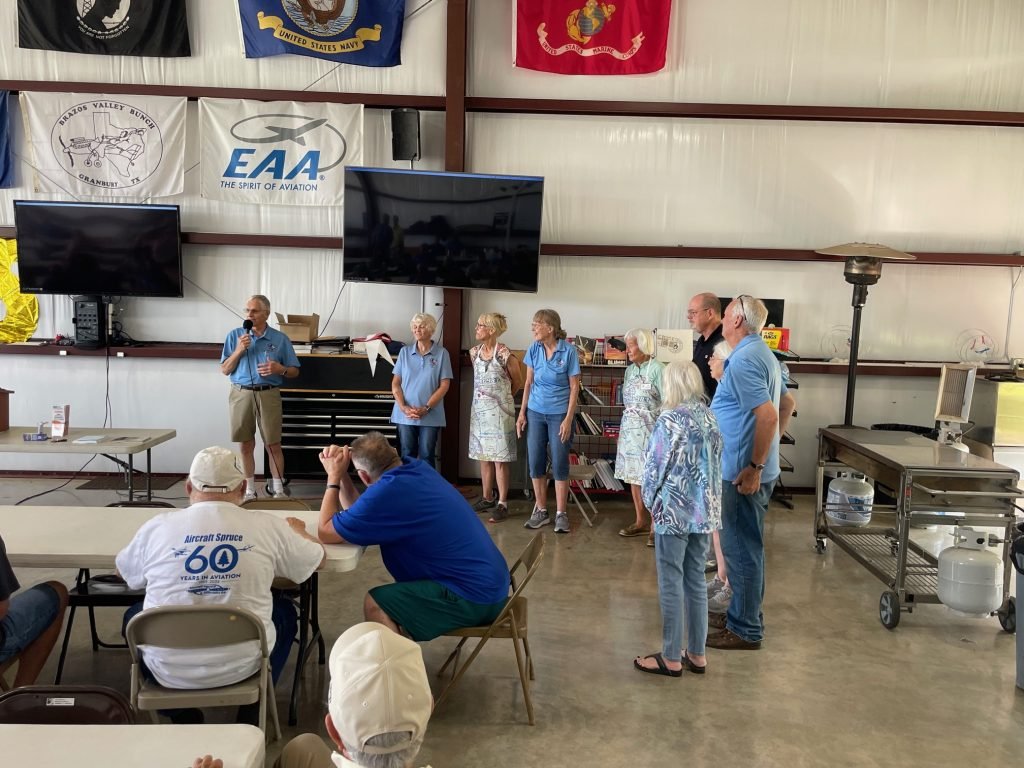
 Spotty Rain Kept the Flying In Visitors Away – A few local showers and clouds made the hanger pleasant for the morning. The pancake grill was on hold as Dick Keyt dashed off for cooking oil. The breakfast service got underway on time at 8:30. We ended up with about 60 in attendance for the meeting and 43 breakfasts sold.
Call to Order – President Dick Keyt called the meeting to order and asked to bring forward the breakfast crew (Pat Hockett, Paula Houston, Sue Cole, Lori Lagergren, Bob Moreau, Barb Wilson, Mike Parrish, Deanna Thibault) for recognition. Their day starts very early!
Dick asked to identify any visitors in attendance. Devon Reyes is a former USMC C-130 and T-6 instructor pilot who now flies for AA as an FO on the 777. He recently put a new engine and constant speed prop in his RV-8A and likes to fly formation and aerobatics. He has lived in the Landings for about a year. Ben Seal is also with AA as an Airbus FO and moved in to the west side of 0TX1. He was a USN T-6 instructor (current reservist) and n0w owns an RV-8 and Yak-55M. Dr Joseph Michaels is a consultant that is a former USAF Colonel who taught at the Air Force Institute of Technology in Dayton and University of North Texas. His banking partner, Carter, joined him for breakfast and to check out the chapter. Carter moved to Pecan two months ago and works for Plains Capital bank.
Project Reports – Kirk Nickman reported his progress on the Quasar Lite.
Jim Crain and Bob Moreau came forward to speak about a special flight they arranged for Chip Mull in a UH-1 Huey based at KGDJ. He was able to sit in the left seat and got some hover time. Bob said he had an ear to ear grin following the flight! Chip flew them in Vietnam and has some harrowing stories. Jim also thanked everyone, especially the Stultz’s, for the 65th wedding anniversary event in the hanger.
Safety Minute: Greg Walker spoke of a recent flight anomaly in his RV-8A and subsequent troubleshooting. Some loose wiring in the EMag connectors resulted in one Mag not getting battery power which is required below 900 rpm. This was not evident during a high power runup although following the flight it did cause the engine to shutdown while taxiing and testing individual mags. He is going to revise his checklist to check the individual mags below 900 rpm in addition to the normal high power mag check. He also emphasized that if something doesn’t sound right or function normally you should shut down and troubleshoot. Greg has some opinions on how a dual EMag setup should be wired for fault isolation.
Name (?) brought up an inadvertent canopy opening during flight of an RV-6 with a tip up canopy. He was able to return to the field while holding the canopy closed. Dick mentioned that Bonanza doors are impossible to close in flight and also said Lancairs have about a 50% fatality rate for canopy opening due to blanking the vertical tail resulting in loss of control.
Bob Moreau informed the audience of a recent finding from the Air India 787 fatal accident. They found both fuel switches had been put in the cutoff position and then returned to normal position just after takeoff. The Ram Air Turbine (RAT) was deployed to provide emergency power for a restart but it could not be accomplished in time. Having flown the 787 Bob said those type of switches could not be inadvertently put in that position.
 EAA National Chapter Award: Dick explained how the chapter has steadily improved the score for Chapter Recognition achieving Gold for the last 3 years. Being one of the recognized chapters put us in a raffle for a special prize during AirVenture 2025. Flight Outfitters is sponsoring a weeklong campsite in Camp Scholler and a trailer for the chapter to use the whole week. The chapter board sought out members who were planning to go to Oshkosh and selected Pat Hockett to stay in the trailer and represent the chapter. Planning is in work for a chapter gathering at the campsite, likely on Wednesday. Details will be provided in a chapter email blast soon.
September Fly In: Bob Pastusek said he had more members come forward to volunteer but more are needed. He encouraged the Landings residents to make the short cross country over to 0TX1 to display their aircraft. John Bowen said that many of the normal Young Eagles pilots will be involved in other Fly In activities and requested more pilots to come forward. The process is easy to make them eligible to perform flights.
Youth Programs: Dick announced that Geneva and Bruce McJunkin were awarded Young Eagles National Volunteers of the Year! This recognized their contributions for our chapter as well as the one they previously volunteered at in California. We are so fortunate to have their experience in helping lead the 983 program.
John Bowen said Mason and Jenny are scheduled to leave for the Air Academy on Tuesday before AirVenture. They will attend the camp through Wednesday of AirVenture week.
Mason Vickers reported he had to suspend his flight training for a little while but is back at it with Mike Hustak. He was very appreciative of the chapter support of his flying endeavors.
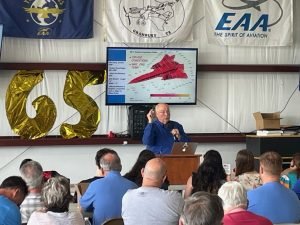 Program: Stormy Boudreaux – U-2 and SR-71 Pilot
John Bowen introduced our speaker, Stormy Boudreaux. John served with him from 1986-1989 at RAF Alconbury where they flew reconnaissance missions in the U-2. Stormy has given talks all over the world but this time he took the opportunity to bring his extended family along to hear one live. A native of New Orleans, LA, he earned a Bachelor of Science in Biology and Education from Tulane University and a Master of Science in Aeronautics from Embry Riddle. He served 24 years in US Air Force as Command Pilot, Standards and Evaluation Pilot and Functional Test Pilot, flew F-4, T-38, T-33, U-2 and SR-71 with over 6,000 hours. He is one of only twelve pilots who have flown operational sorties in both U-2 and SR-71 aircraft. One of his post military stints was working with Lockheed Martin redesigning the U-2 cockpit, getting rid of the steam gauges, and replacing them with 3 Multi-Function Displays. The U-2 is about to celebrate an anniversary – “70 Years Over 70,000 Feet”.
Stormy spent most of the talk discussing the history, interesting facts, and debunking myths of the SR-71. He went through the initial competition with Convair in the late 50s. The Convair design was called the Fish and was to be launched from a B-58. The USAF was unable to give up any B-58s so they selected the Lockheed design as a standalone aircraft system. Key requirements were to fly greater than Mach 3 and above 80,000 feet. The mission required flying in afterburner for over an hour. Modern fighter aircraft are lucky to be able to go 15-20 minutes. SR-71 lifts off at 240 knots. 40% of the aircraft lift comes from the chine around the fuselage. Engine unstarts were one of the biggest technical changes because it 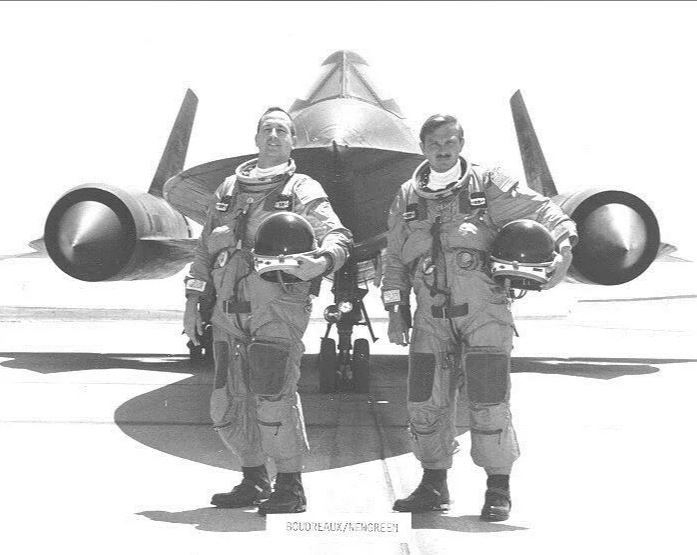 could result in an 80% loss in thrust nearly instantaneously. The resulting asymmetric thrust condition required rapid pilot action. A translating inlet spike was used to manage the shock position and inlet pressures. The spike orientation was optimized to the local airflow thus the reason it is not parallel to the aircraft waterline or buttline.
Stormy distributed a sheet of SR-71 fun facts for the audience. First flight was in December of 1964 and became operational in March 1968. The last operational flights were in October 1989. During the 1990s two SR-71 Black- bird aircraft were used by NASA as testbeds for high-speed and high-altitude aeronautical research at Dryden.
Stormy is currently a Subject Matter Expert on the F-35 program with Lockheed Martin in Fort Worth. Thank you Stormy for such a fascinating presentation!
VMC/IMC Club
Tom Woodward and Dick Keyt were facilitators for this month. There was a good turnout with about 15 pilots and lots of great discussion. Tom Woodward collects a roster of all attendees for FAA Wings Credit.
Thanks to all who stayed to store the tables and chairs and help put the airplanes back in the hanger.
